

Miami’s culinary landscape has evolved into one of North America’s premier sushi destinations. The days of basic spicy tuna rolls drenched in sriracha mayo have given way to world-class Edomae omakase counters, Michelin-starred masters, and inventive Japanese fusion.
Whether you are seeking an ultra-exclusive 8-seat tasting counter tucked behind a taco shop or a buzzing Wynwood happy hour with melt-in-your-mouth akami, navigating Magic City’s sushi scene requires local expertise. Below is an in-depth breakdown of the best sushi spots in Miami, backed by direct dining experience, structural pros and cons, and real Google Maps reviewer consensus.
1. Shingo (Coral Gables) — The Purest Edomae Excellence
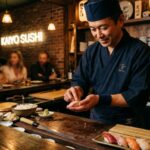
Chef Shingo Akikuni’s Michelin-starred 14-seat counter in Coral Gables represents the pinnacle of traditional Japanese craftsmanship in South Florida. Sourcing fish almost entirely from Japan, every piece of nigiri is served at precise temperatures with custom-grained shari rice.
- Pros:
- Flawless fish quality flown directly from Tokyo’s Toyosu Market.
- Intimate, serene atmosphere free of Miami’s typical loud club music.
- Expertly paced 18-course menu executed with surgical precision.
- Cons:
- High price tag ($200+ per person before drinks and tip).
- Reservations open weeks in advance and sell out in seconds.
2. Hiden (Wynwood) — The Speakeasy Omakase Pioneer
Hidden behind an unmarked door requiring a timed digital keypad code inside a taco stand, Hiden offers an exclusive 8-seat counter experience. The tasting menu seamlessly bridges traditional sushi and seasonal hot dishes.
- Pros:
- Thrilling speakeasy entry experience.
- Outstanding balance of warm cooked courses and pristine sashimi/nigiri.
- Exceptionally knowledgeable and warm chefs who welcome guest interactions.
- Cons:
- Strict cancellation policies and non-refundable deposit tickets.
- Not purely a nigiri-only menu, which may disappoint strict purists.
3. Uchi (Wynwood) — The Creative Heavyweight
Founded by James Beard Award-winning Chef Tyson Cole, Uchi delivers modern Japanese dining where non-traditional flavor pairings elevate fresh seafood. It is widely celebrated for its legendary daily Happy Hour (“Daily Social”).
- Pros:
- Incredible variety ranging from raw ocean catches to hot robata plates.
- Unbeatable happy hour value for high-end dining in Wynwood.
- Warm, attentive hospitality and energetic ambiance.
- Cons:
- Main dining area can get quite noisy during peak evening hours.
- À la carte ordering can add up quickly without a set plan.
4. Sushi Yasu Tanaka (Design District) — High-End Nigiri at Food Hall Prices
Located inside MIA Market in the Design District, Chef Yasu Tanaka offers elevated nigiri without the formal 2-hour white-glove sit-down requirement.
- Pros:
- High-grade fish garnished with inventive touches (like chimichurri hotate or lime-dusted ebi).
- Fast turnarounds perfect for quick business lunches or casual dinners.
- Accessible price points for Michelin-caliber fish execution.
- Cons:
- Food hall seating lacks romantic or private fine-dining ambiance.
- Limited menu focusing almost exclusively on nigiri sets.

Quick Comparison of Miami’s Top Sushi Spots
| Restaurant | Neighborhood | Vibe / Atmosphere | Starting Price | Best Known For |
| Shingo | Coral Gables | Serene, luxury counter | $$$$ | Authentic Edomae Omakase |
| Hiden | Wynwood | Speakeasy, intimate 8-seat | $$$$ | Secret door entrance & Japanese seafood |
| Uchi | Wynwood | Buzzy, modern izakaya | $$$ | Hama Chili & Daily Social Happy Hour |
| Sushi Yasu Tanaka | Design District | Casual food hall counter | $$ | High-value nigiri tasting sets |
| Matsuri | Coral Gables | Neighborhood gem, relaxed | $-$$ | Budget-friendly high quality classic rolls |
What Reviewers Highlight on Google Maps
Analyzing thousands of local local Google Maps reviews reveals consistent patterns across Miami’s sushi landscape:
- Freshness vs. Rice Temperature (Shari): Top-rated spots routinely get praised when the shari (rice) is served body-warm rather than chilled—a clear indicator of authentic prep.
- Noise & Scene vs. Authentic Dining: Reviewers frequently split between wanting a quiet counter experience (like Shingo or Hiden) versus a full party scene (like Sexy Fish or Komodo). High Google ratings often depend on setting accurate customer expectations.
- Reservation & Passcode Frustrations: For speakeasies and omakase counters, standard complaints on Google Maps involve strict 15-minute late policies or lost keypad entry codes.
- Value Perception: Spots like Sushi Yasu Tanaka and Matsuri dominate local Google Maps reviews because customers feel they receive 5-star quality fish at 3-star prices.
Frequently Asked Questions (FAQs)
What is the average cost of an Omakase meal in Miami?
High-end omakase counters typically cost between $175 and $300+ per person before drinks, tax, and tip. However, casual counters and food-hall spots offer sets starting around $50 to $70.
Do I need reservations far in advance for Miami sushi?
For top omakase counters (Shingo, Hiden, Naoe), yes. Booking 2 to 4 weeks in advance is standard. For larger spots like Uchi or Zuma, booking a week prior—or putting your name down early for bar seating—usually works.
Is Miami sushi mostly Japanese fish or local Florida catch?
The top omakase counters fly the majority of their fish directly from Japan’s Toyosu Market multiple times a week. However, many local chefs integrate regional catches like Florida red snapper, key west pink shrimp, or local spiny lobster.
What is the difference between traditional Edomae and modern Miami sushi?
Edomae focuses on traditional preservation techniques (curing, marinating, aging) with minimal garnish on top of warm vinegared rice. Modern Miami sushi frequently incorporates fusion elements like truffle oil, chimichurri, serrano chili, and robata grilling.