










A beginner cruiser board is a compact skateboard designed for smooth transportation, stability, and easy control. It typically features a shorter deck, softer wheels (78A–85A), and responsive trucks that make commuting and casual riding easier than a standard street skateboard.
If you’re just starting out, choosing the wrong board can slow your progress. Too stiff, and you’ll feel every crack. large, and turning becomes harder, small and stability suffers. The right beginner-friendly cruiser gives you balance, comfort, and confidence from day one.
According to participation data from the Sports & Fitness Industry Association (SFIA), skateboarding participation in the U.S. increased by over 30% between 2019 and 2022. Many of these new riders started with cruiser-style boards due to their ease of use and transportation benefits. That trend reflects a simple fact: beginners want a smooth ride skateboard that works immediately.
This guide breaks down exactly how to choose the right small cruiser board using practical criteria. No hype. Just what works.
Why Do Beginners Struggle With the Wrong Cruiser Board?
Short answer: instability, wheel bite, and poor wheel choice are the most common beginner problems.
Problem: Many new skaters buy a board based on looks or price. The result? A board that feels shaky or uncomfortable.
Agitation: When your board wobbles at low speed or stops abruptly on rough pavement, your confidence drops. Falls happen more often. Practice feels frustrating.
Solution: Choosing the right beginner-friendly cruiser eliminates these issues by focusing on deck width, wheel softness, truck stability, and proper sizing.
In a 2021 retail case study from a major skate distributor, return rates for entry-level skateboards were highest among boards with hard wheels (99A+) used for commuting. When customers switched to 78A–85A wheels, satisfaction rates improved significantly. The takeaway? Wheel softness matters more than most beginners realize.
What Size Cruiser Board Should a Beginner Choose?
Short answer: Most beginners do best with a deck width between 7.5” and 8.5” and a length between 27” and 32”.
Why Size Matters
A small cruiser board offers portability. But too small reduces stability. Larger cruisers provide more foot space and balance.
- Under 7.5” width: Harder to balance for adults.
- 7.5”–8.5” width: Ideal beginner range.
- Over 8.5” width: Stable but heavier and less portable.
If you’re commuting or carrying your board daily, a 27”–30” length works well. If you want maximum stability while learning, 30”–32” feels safer.
For more beginner board comparisons, check this detailed guide on beginner-friendly cruiser options.
What Makes a Cruiser Board Deliver a Smooth Ride?
Short answer: Soft wheels, proper wheel diameter, quality bearings, and stable trucks create a smooth ride skateboard.
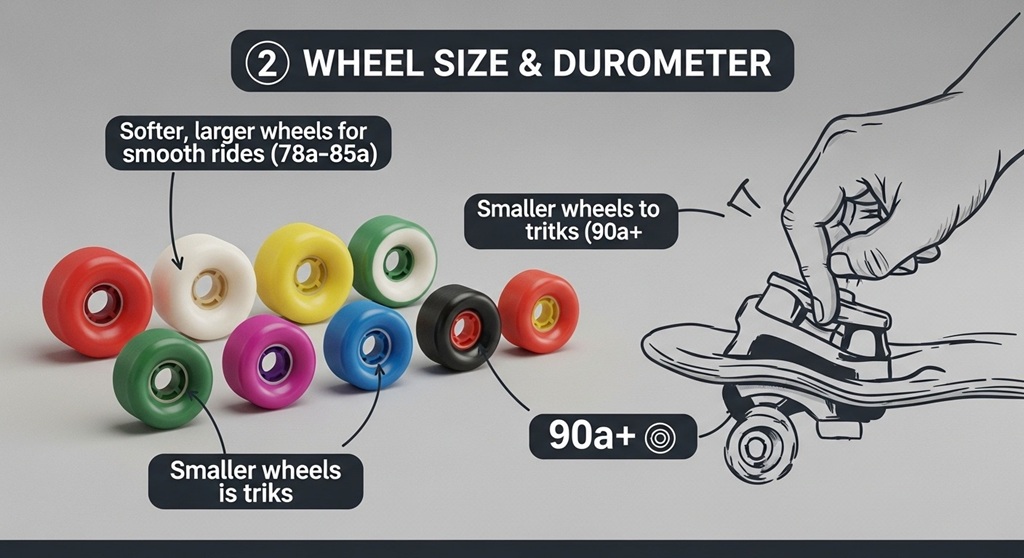
1. Wheel Durometer (Softness)
Look for 78A–85A wheels. Softer wheels absorb cracks and rough pavement. Hard wheels (95A+) are better for skate parks, not commuting.
2. Wheel Size
- 54–56mm: More control, slower top speed.
- 56–60mm: Faster, smoother over cracks.
Beginners usually prefer 56–58mm for balance between speed and control.
3. Bearings
ABEC ratings (5 or 7) are common, but build quality matters more than rating. Clean, lubricated bearings roll better and last longer.
4. Trucks
Wider trucks that match deck width improve balance. Loose trucks turn easier but feel unstable. Beginners should start slightly tight and adjust gradually.
Is a Small Cruiser Board Better Than a Standard Skateboard for Beginners?
Short answer: Yes, for transportation and casual riding. No, if your goal is technical tricks.
| Feature | Cruiser Board | Standard Skateboard |
|---|---|---|
| Wheel Softness | Soft (78A–85A) | Hard (95A–101A) |
| Best For | Commuting, cruising | Tricks, skate parks |
| Stability | High | Moderate |
| Learning Curve | Easier for beginners | Steeper |
If your goal is daily transport, sidewalks, campus travel, or neighborhood rides, a beginner-friendly cruiser makes more sense.
How Important Is Deck Material for Beginners?
Short answer: 7-ply maple decks offer durability and balanced flex for most beginners.
Most quality cruiser boards use Canadian maple. Some budget boards use plastic. Plastic boards are lightweight and weather-resistant but may flex too much for heavier riders.
- Maple: Durable, stable, reliable.
- Plastic: Lightweight, portable, less stable at speed.
If you weigh over 75 kg, maple provides better support and longevity.
How Do You Avoid Wheel Bite on a Cruiser Board?
Short answer: Use proper riser pads and correct wheel size.
Wheel bite happens when wheels touch the deck during turns, causing sudden stops. Beginners often experience this when upgrading to larger wheels.
- Use 1/8” riser pads for 58mm+ wheels.
- Avoid extremely loose trucks at first.
- Match wheel width to deck width.
Simple adjustments prevent most issues.
How Much Should a Beginner Spend on a Cruiser Board?
Short answer: $70–$150 is the practical range for quality beginner setups.
Boards under $50 often use low-quality bearings and stiff bushings. That affects ride comfort and safety.
According to retail pricing data across major online skate shops in 2023, boards in the $90–$120 range had significantly higher customer satisfaction and fewer returns compared to ultra-budget options.
Investing slightly more upfront reduces replacement costs later.
What Setup Is Best for Commuting on Rough Roads?
Short answer: 58–60mm soft wheels (78A–82A), medium-tight trucks, and maple deck.
Urban roads are unpredictable. Cracks, debris, and rough asphalt demand softer wheels. Larger diameter improves roll-over ability.
If your city has uneven sidewalks, prioritize comfort over speed.
How Can Beginners Test Stability Before Buying?
Short answer: Stand on the board and check foot placement width and truck response.
- Your feet should not hang off excessively.
- The board should not wobble excessively when stationary.
- Trucks should respond smoothly without sharp jerks.
If buying online, check deck width and rider height compatibility charts.
Conclusion: How Do You Confidently Pick the Right Cruiser Board?
The right cruiser board solves beginner frustration before it starts. Choose proper width. Prioritize soft wheels. Avoid ultra-cheap setups. Keep trucks moderately tight. Match the board to your environment.
A smooth ride skateboard builds confidence fast. You ride more. improve faster. enjoy the process.
Start smart. Ride consistently. Upgrade when your skills demand it.
FAQ: Beginner Cruiser Board Questions
1. Are cruiser boards good for complete beginners?
Yes. Cruiser boards are stable, comfortable, and easier to control at low speeds compared to trick-focused skateboards.
2. What wheel hardness is best for a smooth ride skateboard?
78A–85A wheels provide better shock absorption and smoother rides on rough pavement.
3. Can adults use a small cruiser board?
Yes, as long as deck width is at least 7.75”–8.5” for proper foot space and balance.
4. Is a cruiser board faster than a regular skateboard?
With larger, softer wheels, cruisers maintain speed better on rough surfaces but may feel slower in skate parks.
5. How long does it take to learn basic cruising?
Most beginners feel stable within 1–2 weeks of regular practice.
6. Do I need protective gear?
Yes. Helmet, wrist guards, and knee pads reduce injury risk, especially during the first month.
Related Topic: How to Survive a Long Distance Relationship: Proven Strategies That Actually Work
Read Next: What Essential Oils Give the Best Day Spa Aromatherapy Experience